

Born on April 22, 1950, in Beckenham, England, Peter Kenneth Frampton was immersed in music from an early age. Encouraged by his family, he gravitated quickly toward the guitar and began performing in school bands while still a child—one of which famously included a young David Bowie.
Frampton’s teenage years brought early fame as a member of the British pop-rock band The Herd. While the group found commercial success, its chart-oriented material masked Frampton’s deeper musical instincts. Even at that stage, his melodic phrasing and expressive touch hinted at a guitarist searching for something more enduring than pop stardom.
Early Influences
Frampton’s musical foundation was shaped by a blend of British rock and American blues traditions. Early influences included Hank Marvin’s clean melodic sensibility, Eric Clapton’s expressive blues phrasing, and Jimi Hendrix’s tonal imagination. Yet Frampton absorbed these influences selectively, favoring emotional clarity over raw aggression.
Rather than pursuing speed or flash, he focused on sustain, tone, and phrasing—approaching the guitar as a vocal instrument capable of telling a story rather than delivering a technical display.
Career Milestones
Humble Pie and the Fire vs. Finesse Dynamic
Frampton’s next defining chapter came with Humble Pie, co-founded with vocalist Steve Marriott. The contrast between Marriott’s explosive, blues-driven intensity and Frampton’s controlled, lyrical guitar lines created a dynamic tension that shaped his musical identity. While the band leaned toward heavy blues rock, the experience clarified Frampton’s artistic direction: expression over brute force.
Frampton Comes Alive! and the Arena Rock Moment
In 1976, Frampton Comes Alive! captured lightning in a bottle. Recorded live at the height of his touring powers, the double album showcased Frampton’s relaxed confidence, melodic authority, and rare ability to connect with massive audiences.
His use of the talk box—most famously on “Do You Feel Like We Do”—turned the guitar into a literal voice, creating the illusion of a dialogue between performer and crowd. The album became one of the best-selling live records in history and defined the sound and spectacle of 1970s arena rock.
Backlash, Reassessment, and Endurance
With enormous success came critical backlash. Frampton was often dismissed as a heartthrob rather than a serious musician, and his post-peak commercial output was uneven. Still, he remained a respected figure among peers, collaborating with artists such as David Bowie and Ringo Starr while continuing to tour extensively.
In 2007, his instrumental album Fingerprints won the Grammy Award for Best Pop Instrumental Album, signaling a long-overdue reassessment of his musicianship. His induction into the Rock and Roll Hall of Fame in 2024 completed a career arc defined by endurance and artistic credibility.
Playing Style
Peter Frampton’s playing is defined by clarity, warmth, and melodic intention. His solos sing rather than shred, prioritizing phrasing, touch, and emotional contour over technical excess. Even at his most virtuosic, the emphasis remains on feel and musical conversation.
Frampton demonstrated that guitar mastery did not need to intimidate. His playing invites listeners in, balancing technical control with an unmistakable sense of joy and accessibility.
Signature Gear and Tone
Frampton is most closely associated with Gibson Les Paul Custom guitars, which helped define his warm, sustaining tone during his peak years. His amplification choices emphasized clarity and responsiveness, allowing dynamics and touch to shape the sound more than heavy effects.
The Heil talk box became his most iconic piece of gear, permanently altering the vocabulary of rock guitar by transforming the instrument into a vocal-like voice. Despite this innovation, Frampton remained restrained in his use of effects, relying primarily on phrasing, sustain, and dynamic control to communicate expression.
Legacy
Peter Frampton’s legacy lies in his ability to bridge worlds. He proved that a guitarist could be both a pop icon and a respected musician without compromising musical integrity. His success thrilled mainstream audiences while unsettling purists, but time has validated his approach.
He showed that accessibility and artistry are not opposing forces—and that the electric guitar, at its best, speaks with people rather than at them. His influence extends beyond technique into the realm of emotional communication, shaping generations of melodic rock guitarists.
Final Reflection
Frampton’s career is a reminder that technical skill gains its true power only when paired with connection. His greatest achievement was not innovation for its own sake, but his ability to make audiences feel personally addressed by the music—turning large-scale performance into something intimate.
As Frampton once reflected on his approach to playing:
“I always wanted the guitar to sing—to feel like it was part of a conversation, not a competition.” — Peter Frampton
That philosophy defines his enduring appeal.
Recommended Listening
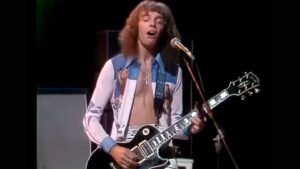
Show Me The Way
Peter Frampton turns the talk box into a melodic voice, shaping a performance where warmth, timing, and connection matter more than flash or volume.
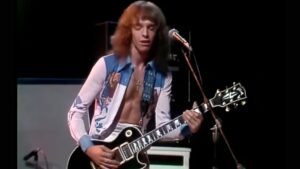
Do You Feel Like We Do
A live performance where Peter Frampton turned the guitar into a speaking voice, proving that connection—not spectacle—was the real power behind his most enduring recording.